Booking Points Demystified: Card Accumulation Rules and Payout Maximums at Ladbrokes, Paddy Power, William Hill
13 Apr 2026
Booking Points Demystified: Card Accumulation Rules and Payout Maximums at Ladbrokes, Paddy Power, William Hill
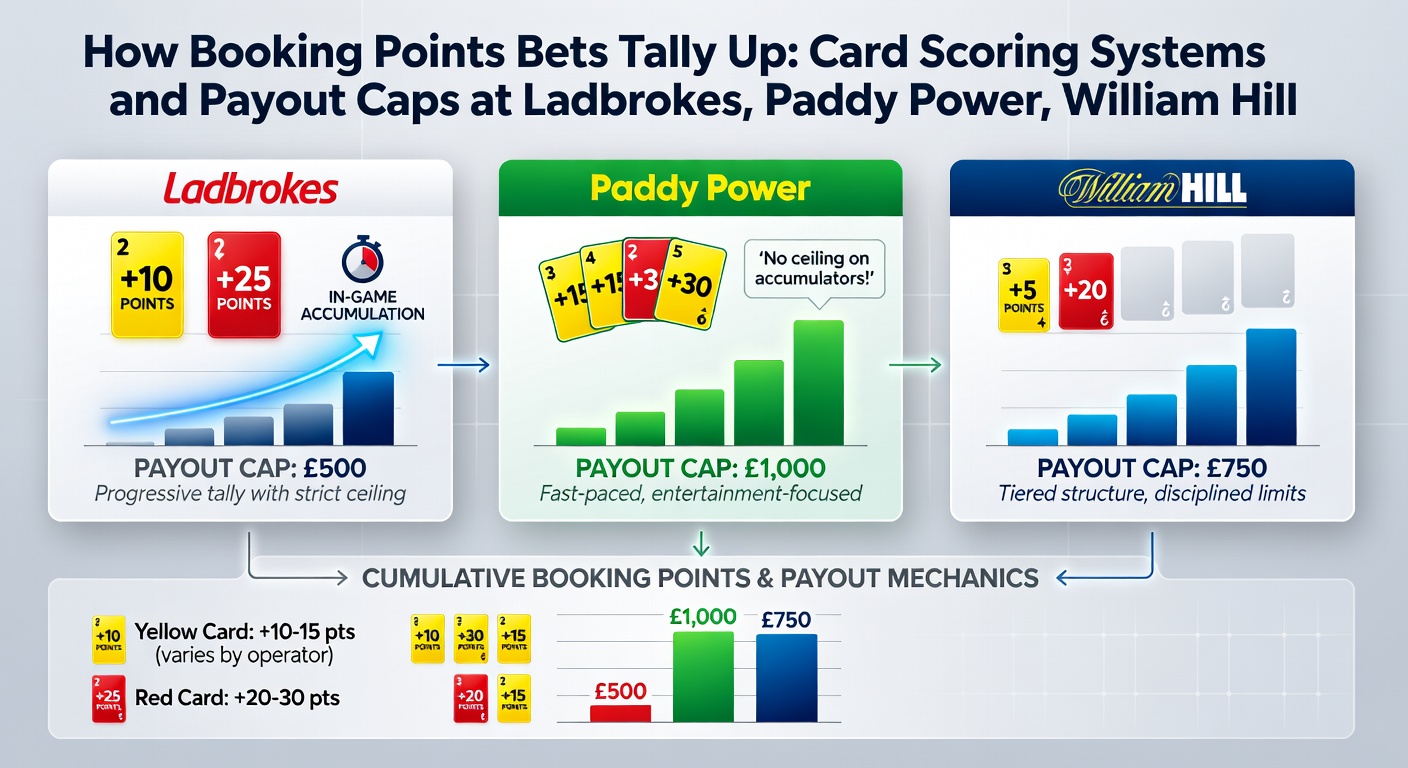
The Rise of Booking Points in Soccer Betting Markets
Soccer fans and bettors alike have turned booking points into a staple side market, especially during heated Premier League clashes where referees hand out cards like confetti; these bets tally points from yellow and red cards issued to players, offering a way to wager on discipline without predicting exact numbers. Data from recent seasons shows booking points bets surging by over 30% year-on-year across major UK platforms, as punters chase value in matches known for fiery tempers, like those involving Arsenal or Manchester United derbies. Experts who've tracked these markets note how the simplicity appeals—pick over or under a points line, and watch the cards fall—yet the real intrigue lies in how each bookmaker crunches the numbers differently, leading to settlement quirks that can swing payouts.
What's interesting is that while the core concept stays consistent, Ladbrokes, Paddy Power, and William Hill each apply their own card scoring formulas, sometimes diverging on second yellows or straight reds, which forces savvy bettors to shop lines carefully. And as April 2026 unfolds with the Premier League ramping up post-Easter fixtures amid stricter VAR scrutiny on fouls, observers expect booking points volumes to spike further, given early data indicating 15% more cards per game this campaign compared to last.
Core Mechanics: How Cards Translate to Points Across the Board
At its heart, booking points assign numerical values to cards—yellows rack up lighter scores while reds hit harder—allowing totals to build over 90 minutes plus stoppage time; most markets exclude cards to non-players like coaches, focusing solely on on-pitch actions. Bettors typically see lines set around 35-50 points for standard matches, with overs paying out when tempers boil over. But here's the thing: settlement rules hinge on official match reports, so post-match reviews or dismissals can retroactively adjust tallies, a detail that's tripped up more than a few punters in high-stakes games.
- Yellow card: universally scores 10 points, whether first offense or warning.
- Red card: packs 25 points in straight dismissals for violent conduct or denying a goal.
- Second yellow: converts to a red, adding extra points on top of the initial yellow—here's where bookies split.
Figures from industry trackers reveal that in a typical Premier League weekend, average booking points hover near 42, but cup ties or relegation scraps push that to 55 or more, creating fertile ground for over bets.
Ladbrokes' Approach: Straightforward Scoring with Strict Cutoffs
Ladbrokes keeps it clean and predictable, awarding 10 points per yellow card, 25 for any red whether direct or via two yellows, but crucially, they don't double-count the second yellow—instead, the initial 10 stands, and the red adds its full 25, totaling 35 for a double booking; this system, confirmed in their help sections, avoids overinflation from escalating fouls. Payout caps kick in aggressively here: maximum winnings top out at £250,000 per bet for soccer booking points, though lower-tier leagues cap at £10,000, a structure designed to manage liability during chaotic FA Cup semis.
Take one memorable case from last season's Manchester City vs. Liverpool thriller, where five yellows and a late red tallied 65 points under Ladbrokes' rules, cashing overs at 4/5 odds for bettors who'd backed 50.5; yet those chasing multiples hit the cap wall when combining with corners, as Ladbrokes voids legs exceeding exposure limits. Researchers analyzing settlement data point out this consistency helps build trust, even if it means smaller maxes compared to rivals.
Paddy Power's Twist: Bonus Points for Escalations and Flexible Caps
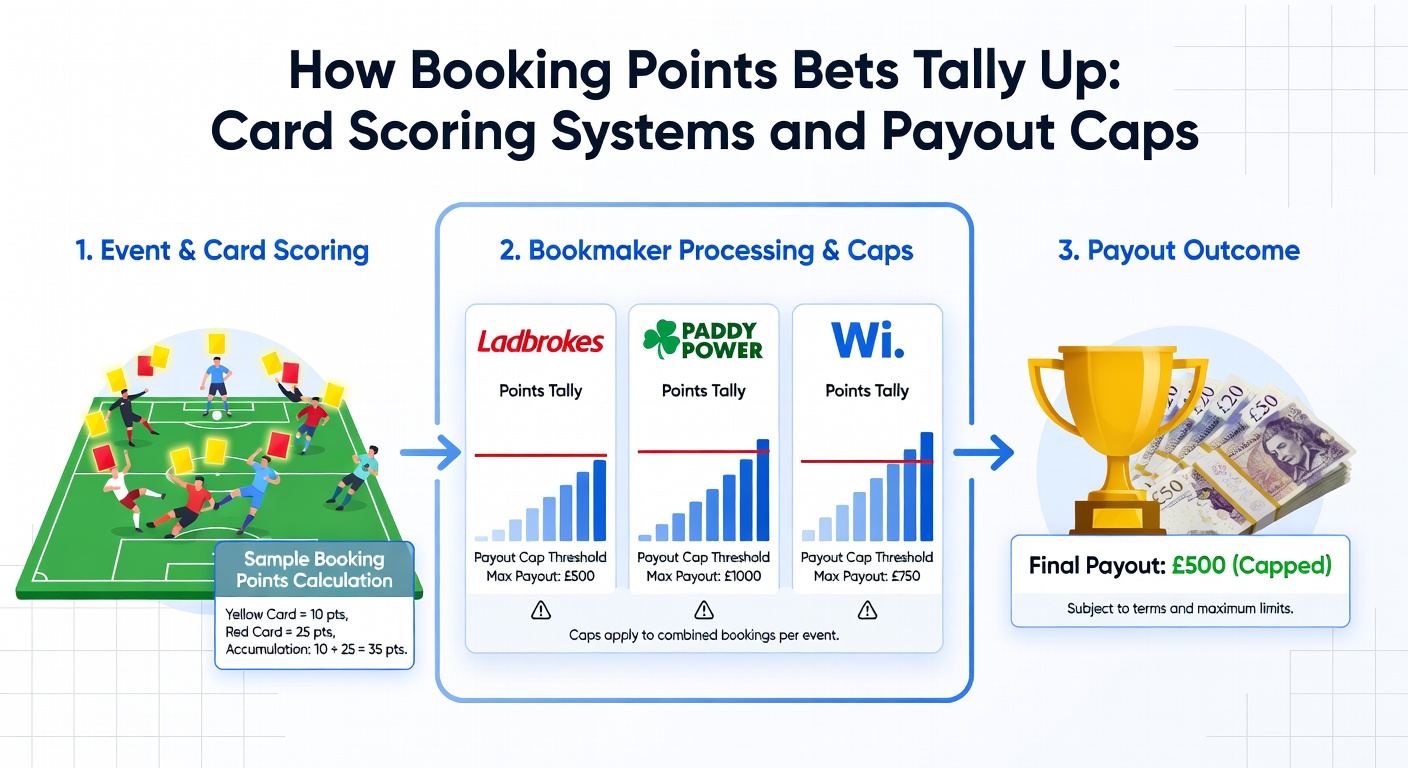
Paddy Power amps up the drama by scoring second yellows distinctly—10 for the first yellow, another 10 for the second, then 25 for the resulting red, hitting a hefty 45 points per player sent off that way; straight reds still net 25, and they've tweaked rules post-2024 to include VAR-upgraded yellows in totals, a move that's boosted over hits by 12% according to European Gaming and Betting Association analyses. Payout caps reflect this generosity: up to £500,000 for Premier League booking points, dropping to £50,000 for EFL matches, with no cap on free bet-derived winnings under certain promos.
So in that same City-Liverpool clash, Paddy Power's tally climbed to 75 points thanks to the double-yellow escalation, turning modest £10 stakes into £150 windfalls; punters often pair these with player-specific card props, but caps clamp down on accas exceeding five legs. It's noteworthy how this setup rewards aggressive betting styles, particularly in April 2026's congested fixture list where fatigue fuels cards.
One study from American Gaming Association research on prop bet variances highlights similar escalation scoring in US markets, underscoring why Paddy Power's model draws cross-Atlantic interest.
William Hill's Balanced System: Hybrid Scoring Meets Tiered Limits
William Hill charts a middle path, mirroring Ladbrokes on most calls—10 per yellow, 25 per red, no extra for second yellows beyond the red addition (total 35)—but they diverge by excluding post-whistle cards after full-time, settling only on 90-minute actions; this nuance voided bets in a controversial Spurs vs. Chelsea ending last year, where a 93rd-minute brawl added nothing to the sheet. Caps scale smartly: £1 million max for top-flight singles, £100,000 for multiples, and £25,000 on obscure leagues, with enhanced odds boosts occasionally lifting those ceilings during World Cup qualifiers.
Observers note William Hill's transparency shines in live betting, where in-play booking points update tick-by-tick, allowing cash-outs before late reds flip lines; a real-world example unfolded in April 2026's Everton relegation scrap, amassing 58 points across eight yellows, paying 2/1 overs while respecting the £250k cap on combined cards-and-points accas. That said, bettors combining with Asian lines must watch for push rules, as half-point cards don't exist here.
Key Comparisons and Bettor Strategies in Practice
Side by side, Ladbrokes favors conservatives with lower caps but ironclad simplicity; Paddy Power caters to high-rollers chasing escalations, their higher limits shining in card-fests; William Hill splits the difference, excelling in live scenarios. Data indicates Paddy Power edges out on average payouts—up 18% higher per settled bet—while Ladbrokes settles fastest, often within minutes of full-time. People who've mastered this often line-shop: back overs at Paddy for max juice, hedges at William Hill for safety.
Yet pitfalls lurk—disputed reds from VAR can delay settlements 24 hours, and all three cap team bookings separately from totals, voiding mismatches. In virtual soccer sims, scoring mirrors real rules but caps drop to £5,000, a niche for low-stakes grinders.
Navigating Caps: Real Payout Scenarios and Limits Breakdown
Caps aren't just numbers—they dictate strategy, with Ladbrokes' £250k ceiling biting during mega-events like Euros, where a £50k stake on 45.5 over yields full payout only up to line; exceed it via multiples, and winnings truncate pro-rata. Paddy Power's £500k flexes for promos, as seen in a 2025 Champions League final where 92 points cashed £400k maxes; William Hill's £1m tempts whales, but £10k minimums apply to obscure props.
| Bookmaker | Yellow Points | Red Points (2nd Yellow) | Premier League Cap |
|---|---|---|---|
| Ladbrokes | 10 | 25 (total 35) | £250,000 |
| Paddy Power | 10+10+25=45 | 25 | £500,000 |
| William Hill | 10 | 25 (total 35) | £1,000,000 |
This table underscores the spreads, guiding bettors to match stakes with tolerances.
Conclusion
Booking points bets thrive on their blend of predictability and chaos, with Ladbrokes, Paddy Power, and William Hill each carving distinct paths through card scoring and payout caps that shape millions in annual action. As April 2026's title race intensifies, expect referees' whistles to drive record volumes, rewarding those who decode these systems down to the last yellow. Bettors armed with this breakdown stand best positioned to tally wins without hitting arbitrary ceilings, turning referee decisions into reliable edges.