25 Jun 2026
Divergent Stake Thresholds for Multi-Leg Wagers at Britain's Licensed Betting Sites
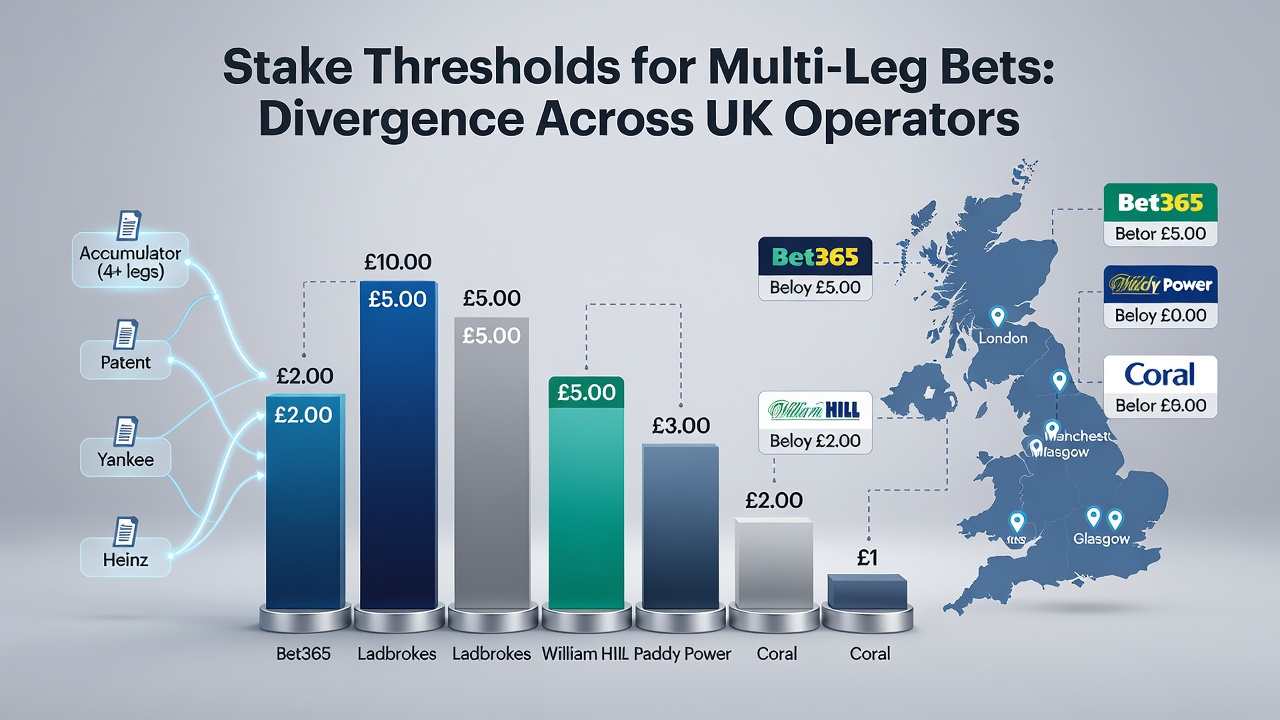
Complex multi-leg bets, often structured as accumulators or parlays spanning several selections, carry distinct stake thresholds at each licensed operator in Britain, and these variations stem from risk management protocols plus differing commercial strategies. Operators adjust maximum stakes based on the number of legs involved, the sports covered, and the overall liability exposure, which leads to noticeable differences that bettors encounter when placing wagers with four or more components. Data collected through industry monitoring in early 2026 shows these thresholds shifting in response to market conditions and regulatory expectations around responsible staking.
Core Mechanics Behind Threshold Setting
Each operator calculates stake limits for multi-leg bets by factoring in the combined odds, the probability of payout, and historical loss ratios for similar bet types, and this process creates a framework where a five-leg football accumulator might face a £50 cap at one site while another permits up to £200. Thresholds typically decrease as the number of legs increases because longer combinations amplify potential returns and corresponding risk, whereas shorter combinations receive more lenient treatment. Observers note that these calculations incorporate real-time data feeds on team performance and market liquidity to fine-tune exposure limits on a daily basis.
Systems also differentiate between same-sport accumulators and cross-sport combinations, with the latter often subject to tighter restrictions since correlations between outcomes prove harder to model accurately. In June 2026 several operators updated their internal algorithms following reviews of payout patterns from the previous season, resulting in modest adjustments to certain football and tennis multi-leg categories.
Operator-Specific Threshold Patterns
Major platforms display clear divergence when handling bets with six or more legs, where one leading bookmaker enforces a £25 maximum stake across most accumulator types while competitors allow between £75 and £150 depending on the sport mix. These differences arise because each firm maintains proprietary models for assessing volatility, and firms with larger customer bases tend to implement more conservative caps to protect margins. Smaller operators sometimes adopt higher thresholds on niche markets to attract specialized bettors, although they apply stricter limits on popular leagues to balance overall book exposure.
Take one case where experts examined accumulator rules across five prominent sites during spring 2026, and the analysis revealed that thresholds for horse racing multi-leg bets ranged from £40 at the most restrictive platform to £180 at the most permissive, while football equivalents showed even wider spreads. Such patterns influence how bettors distribute wagers, with many splitting stakes across multiple operators to optimize total exposure within individual limits.
Impact of Market Conditions on Limits
Seasonal events and fixture density directly affect threshold availability, and operators frequently lower maximum stakes during high-profile tournaments when betting volumes surge and payout risks concentrate. In periods of elevated market activity, such as major championship weeks, several firms reduce six-leg thresholds by 30 to 50 percent compared with off-peak periods, although they restore original levels once demand normalizes. These dynamic adjustments rely on automated monitoring tools that track incoming bet volumes and adjust in near real time.
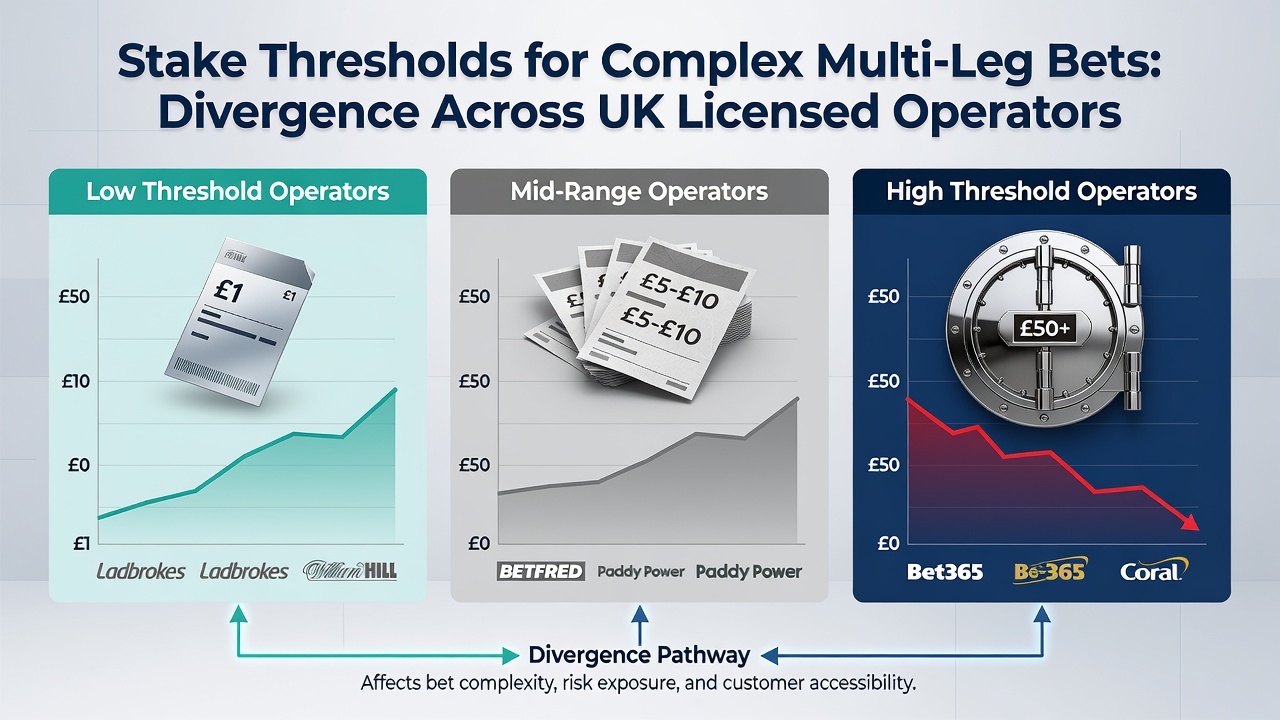
Research from the Responsible Gambling Council indicates that transparent communication of these thresholds correlates with steadier customer engagement patterns across regulated markets. Operators that publish clear stake matrices in advance tend to see fewer abandoned bets during the placement process, which supports overall platform efficiency.
Regulatory Context and Industry Standards
Britain's licensing framework requires operators to maintain responsible gambling controls, which include stake threshold mechanisms designed to prevent excessive exposure on high-odds combinations, and compliance teams review these controls periodically to ensure alignment with broader harm reduction objectives. Although each firm retains discretion over specific numbers, industry associations encourage consistency in how thresholds are disclosed to customers so that bettors can compare options across platforms without undue friction. Reports compiled by the Australian Gambling Research Centre highlight similar threshold management approaches in other regulated jurisdictions, underscoring the global nature of risk modeling techniques.
Those who have studied operator behavior note that threshold policies evolve alongside technological improvements in odds compilation and liability tracking, allowing more granular adjustments than were feasible five years earlier. In practice this means a bettor constructing an eight-leg tennis parlay encounters different ceilings depending on the chosen operator, and these differences can determine whether the full stake is accepted or automatically scaled down at the confirmation stage.
Conclusion
Stake thresholds for complex multi-leg bets continue to vary substantially across Britain's licensed operators because each firm applies distinct risk parameters shaped by customer volume, historical data, and commercial priorities. Bettors benefit from understanding these differences when structuring accumulators, since splitting activity across platforms often allows fuller utilization of available limits. Ongoing refinements in June 2026 and beyond will likely reflect further integration of predictive analytics, maintaining the current landscape of divergence while improving transparency for users.