25 Jul 2026
Divergent Withdrawal Protocols in UK Mobile Betting Apps During Major Tournaments
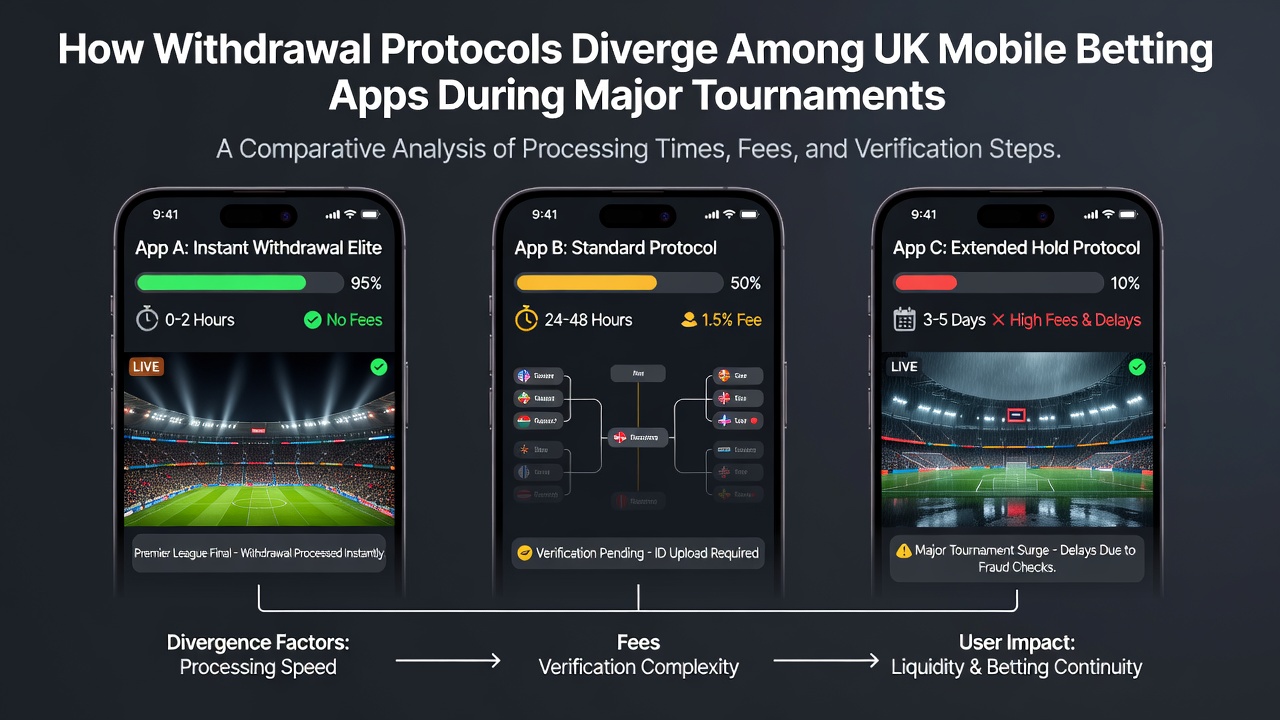
UK mobile betting apps apply distinct withdrawal protocols that shift noticeably when major tournaments generate elevated transaction volumes, and these variations stem from differences in verification layers, payment provider integrations, and internal risk controls. Observers note that apps such as those operated by larger operators often maintain separate queues for high-volume periods while smaller platforms route requests through centralized systems that experience greater backlogs. Data from industry reports indicate that processing timelines can stretch from same-day approvals to multi-day reviews once tournament activity peaks, particularly when users request sums above established thresholds.
Verification Steps That Lengthen During Peak Periods
Verification requirements diverge sharply across platforms because each operator maintains its own compliance framework tied to source-of-funds checks and identity confirmations. Some apps trigger additional document uploads only when withdrawal amounts exceed a daily cap, whereas others apply enhanced scrutiny to every request once tournament betting surges begin. Researchers have documented cases where biometric re-authentication becomes mandatory mid-tournament on certain platforms, forcing users to complete facial scans before funds release. These steps connect directly to anti-money-laundering rules that intensify when transaction patterns deviate from baseline activity recorded outside event windows.
Payment Method Influences on Release Speed
Payment method selection determines much of the divergence because e-wallets, bank transfers, and card refunds operate under separate clearing schedules. One study revealed that e-wallet withdrawals often clear within hours on platforms with direct API connections, while bank transfers require additional settlement days regardless of tournament timing. Observers note that certain apps restrict users to slower methods during July 2026 events due to temporary provider limits imposed by external processors handling increased European traffic. Those who've examined transaction logs find that debit card refunds sometimes route through intermediary processors that apply extra holds when overall gambling volumes rise across the market.
Operator-Specific Thresholds and Queue Management
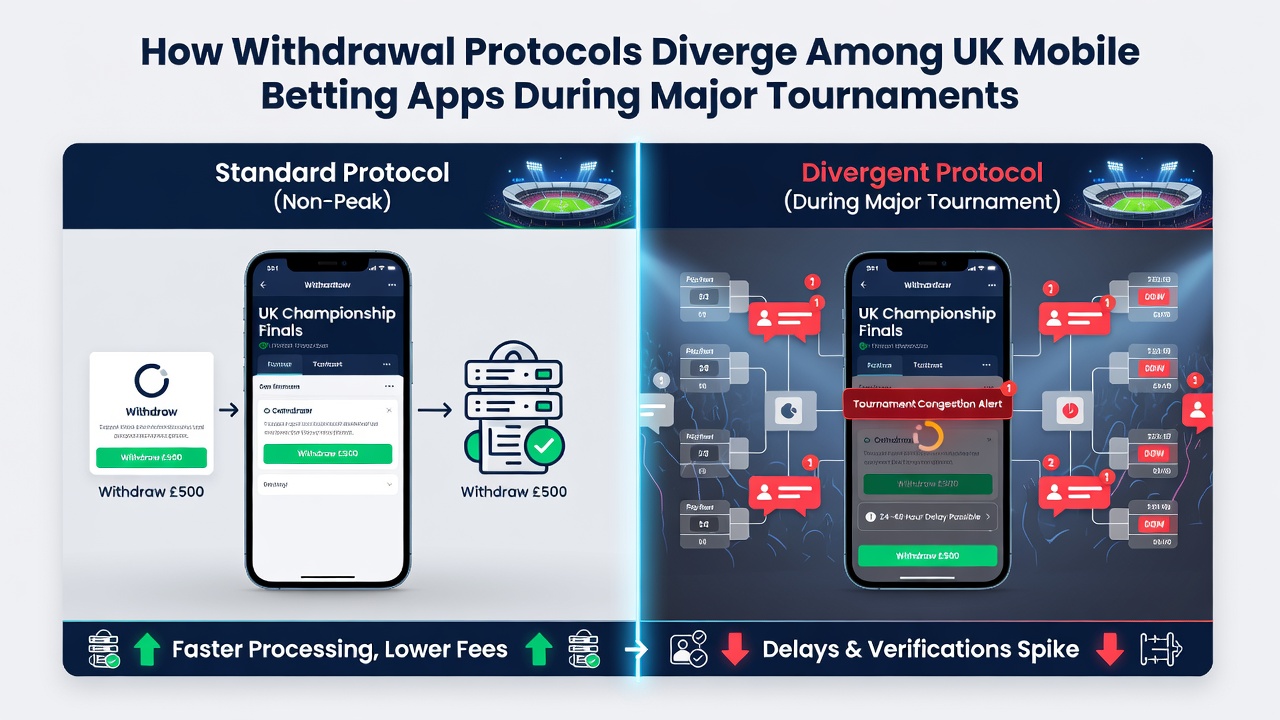
Threshold policies create further distinctions because operators set internal limits that activate automatically when tournament-driven withdrawals multiply. Some platforms allow multiple smaller withdrawals without added review, while others consolidate requests into single batches that undergo consolidated checks. Figures from regulatory filings show that apps with automated flagging systems route a higher percentage of requests to manual review teams once daily volumes surpass normal baselines. Those who've tracked patterns across operators report that queue prioritization sometimes favors verified premium account holders during events such as the 2026 summer competitions, leaving standard users with extended wait times.
External Regulatory Pressures Shaping Protocols
External regulatory pressures contribute to the spread in protocols because operators align internal procedures with guidance issued by bodies beyond the primary UK framework. European Gaming and Betting Association reports highlight how cross-border operators adapt withdrawal controls to satisfy multiple jurisdictions simultaneously, resulting in layered checks that extend beyond single-market requirements. Data from the National Council on Problem Gambling in the United States further shows that operators with international operations sometimes import verification standards developed for other regions, producing additional friction during UK tournament spikes. These overlapping obligations produce the observed divergence without any single uniform approach across the sector.
Impact on User Transaction Patterns
User transaction patterns shift as participants adjust withdrawal strategies to navigate the differing protocols. Research indicates that frequent bettors often split larger sums into smaller requests on platforms known for faster processing, while others consolidate on apps that apply fewer intermediate verifications. Observers note that these adaptations become more pronounced in July 2026 when multiple overlapping tournaments increase overall activity and push systems closer to capacity. The resulting landscape features no universal standard, only operator-specific pathways that users must learn through direct experience or published policy updates.
Conclusion
Withdrawal protocols among UK mobile betting apps continue to diverge based on verification intensity, payment infrastructure, and volume-triggered controls that activate during major tournaments. Evidence from transaction analyses and regulatory filings demonstrates that these differences produce measurable variations in release times and required steps, with no indication of convergence in the near term. Operators maintain distinct systems shaped by their technical setups and external compliance obligations, leaving users to navigate platform-specific rules when seeking access to funds after tournament activity.